
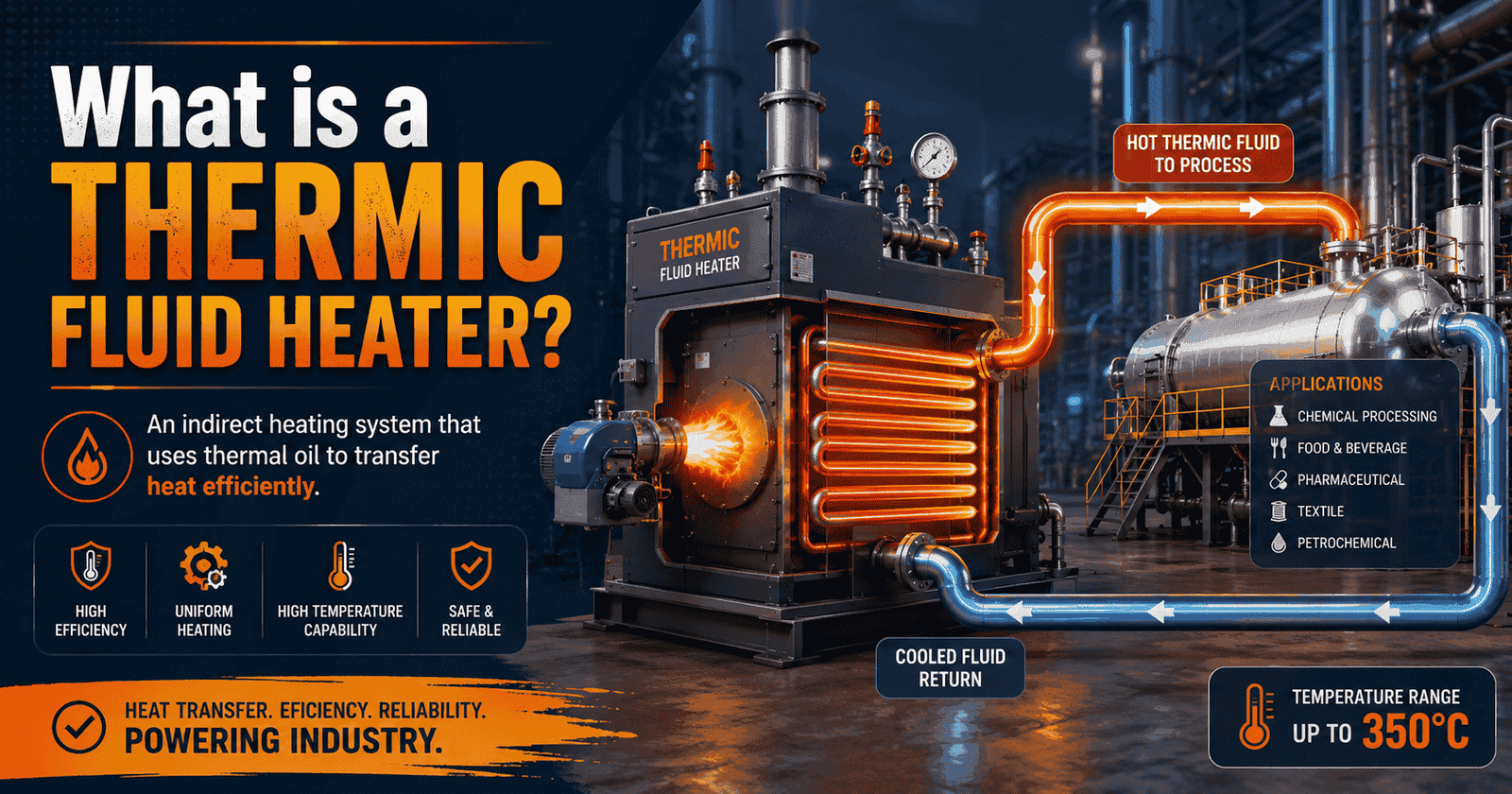
In many industries, heating is not just about producing steam. Some processes require a stable and high temperature without the pressure, water treatment, and operational complexity of a steam boiler. This is where a thermic fluid heater, also known as a thermal oil heater, becomes useful.
A thermic fluid heater is an industrial heating system that heats a special heat-transfer fluid and circulates it through process equipment. The heated fluid transfers thermal energy to machines, tanks, dryers, reactors, or other equipment before returning to the heater for reheating.
The basic idea is simple: heat the oil, circulate it, transfer the heat, and repeat the cycle.
How Does a Thermic Fluid Heater Work?
A thermic fluid heating system works as a closed-loop system. The thermic fluid moves continuously between the heater and the process equipment.
Inside the heater, a burner produces heat by burning fuel such as natural gas, diesel, furnace oil, biomass, or another available fuel. The heat generated in the combustion chamber is transferred to the thermic fluid flowing through coils.
A circulation pump then sends the hot fluid to the required process. After giving up part of its heat, the cooler fluid returns to the heater.
Main Working Cycle
The operating cycle normally follows these steps:
- The burner produces hot flue gases.
- Thermic fluid passes through heating coils.
- Heat moves from the flue gases to the fluid.
- The circulation pump sends the hot fluid to the process.
- The process absorbs heat from the fluid.
- The cooler fluid returns to the heater.
Unlike steam systems, the thermic fluid does not need to change into vapour to carry heat. It remains in liquid form during normal operation.
Why Is Thermic Fluid Used Instead of Water?
Water is an excellent heat-transfer medium, but it has one major limitation. To reach high temperatures, water must be converted into steam, and higher steam temperatures usually require higher operating pressure.
A thermic fluid system can achieve temperatures of around 250°C to 350°C, depending on the fluid and heater design, while operating at comparatively low system pressure. This makes it suitable for industries that need high and steady process temperatures.
A Simple Comparison
Imagine that a process requires heating at 280°C. Producing steam at this temperature would require a high-pressure steam system. That means stronger pressure vessels, additional safety requirements, regular water treatment, steam traps, condensate handling, and more inspection work.
A thermic fluid heater can supply the required temperature without producing high-pressure steam. The pressure in the system is mainly created by the circulation pump and the resistance of the piping network.
Main Components of a Thermic Fluid Heater
A thermic fluid heating system includes several important components. Each one must work correctly for safe and reliable operation.
Heater Coil
The heater coil carries the thermic fluid through the combustion zone. Heat from the burner and flue gases passes through the coil wall into the circulating fluid.
Good fluid flow through the coil is extremely important. Low flow can create local overheating and damage both the thermic fluid and the coil.
Burner and Combustion System
The burner provides the required heat. It may use gas, oil, biomass, or another fuel. Proper air-fuel ratio, flame shape, fuel pressure, and combustion control are necessary for efficient operation.
A dirty burner or poor combustion can increase fuel consumption and produce smoke, soot, or unstable flame conditions.
Circulation Pump
The circulation pump keeps the thermic fluid moving through the heater and process equipment.
The pump must normally start before the burner is allowed to fire. If the burner operates without proper fluid circulation, the oil inside the coil can overheat within a short time.
Expansion Tank
Thermic fluid expands as its temperature rises. The expansion tank provides space for this increase in volume. It also helps in venting air, moisture, and vapours from the system. The tank is usually installed at the highest point of the circuit.
Process Heat Exchanger
The hot thermic fluid transfers heat to the process through a heat exchanger, jacketed vessel, dryer, hot plate, reactor, or another heating surface.
Where Are Thermic Fluid Heaters Used?
Thermic fluid heaters are used in industries where accurate and uniform heating is important.
Common applications include:
- Textile machines and fabric finishing
- Food processing and frying systems
- Chemical reactors
- Pharmaceutical manufacturing
- Plywood and laminate presses
- Bitumen and asphalt plants
- Paint and resin production
- Plastic and rubber processing
- Printing and packaging machines
- Edible oil plants
- Dryers and industrial ovens
A Practical Industrial Example
Consider a plywood factory using a hot press. The press requires a stable temperature to cure the adhesive between wooden layers.
If the temperature keeps changing, the boards may not bond correctly. Some sheets may remain weak, while others may become overheated or discoloured.
A thermic fluid heater supplies controlled heat to the press plates. Because the oil temperature can be maintained within a narrow range, the product quality becomes more consistent.
Advantages of a Thermic Fluid Heater
One of the biggest advantages is the ability to achieve high temperatures at relatively low pressure.
Other advantages include:
- No boiler water treatment
- No steam trap system
- No condensate recovery system
- Lower risk of corrosion caused by water
- Stable process temperature
- Easy temperature control
- Reduced freezing risk
- Lower pressure-related stress
- Good heat-transfer performance
- Possibility of serving several process machines
However, these advantages do not mean that the system is maintenance-free. Thermic fluid heaters require disciplined operation and regular monitoring.
Thermic Fluid Common Operational Problems
Thermic Fluid Degradation
Thermic fluid can break down when it is exposed to excessive temperature, air, contamination, or long operating hours. Degraded oil may become thicker and produce carbon deposits. This reduces heat transfer and increases pressure drop. A common warning sign is when the heater outlet temperature looks normal, but the process takes longer than usual to heat up.
Low Fluid Circulation
Low circulation can be caused by a weak pump, blocked strainer, closed valve, air pocket, damaged impeller, or increased oil viscosity. This is a serious condition because the fluid may overheat inside the heater coil.
Coil Fouling
Soot may collect on the fireside of the coil, while carbon deposits may form inside the coil. Both conditions reduce heat transfer. The operator may notice higher flue-gas temperature, increased fuel consumption, or slower process heating.
Leakage
Thermic fluid leakage must never be ignored. Hot oil contacting an ignition source, flame, or hot surface can create a fire hazard. Even a small leak around a pump seal, flange, valve, or gasket should be corrected promptly.
Practical Advice for Safe Operation
Always confirm that the circulation pump is running before starting the burner. Check the inlet and outlet temperatures, pump pressure, expansion tank level, fuel pressure, and flow condition.
Avoid increasing the temperature too quickly during a cold start. Slow heating allows moisture and trapped air to leave the system safely.Do not mix different grades of thermic fluid unless the fluid supplier confirms compatibility. Mixing unsuitable fluids can affect viscosity, flash point, heat-transfer performance, and service life.
Take oil samples at planned intervals. Laboratory testing can identify changes in viscosity, acidity, carbon content, flash point, and contamination before a major failure occurs. Also remember to keep insulation in good condition. Damaged insulation wastes heat and creates dangerous hot surfaces around the plant.
Final Thoughts
A thermic fluid heater is a reliable and efficient solution for industrial processes that need high-temperature heating without high-pressure steam.
Its operation may look straightforward, but safe performance depends on proper circulation, clean heat-transfer surfaces, healthy thermic fluid, good combustion, and careful temperature control.
The most important lesson is simple: never focus only on the heater outlet temperature. Watch the complete system, including flow, pump condition, pressure, expansion tank level, flue-gas temperature, process performance, and fluid quality. When operators understand how the complete circuit works, they can improve safety, reduce fuel consumption, extend equipment life, and prevent unexpected shutdowns.
![Er. Joginder Chauhan [ B.Tech (Mech.) ,BOE ,E.M ]](https://secure.gravatar.com/avatar/b42e4338be7c6c02a9a859b2b728e95a7c171d5a5e4d476cf8cfa56404f790b4?s=100&d=mm&r=g)